
A classic issue that startups grapple with is attaining efficiency in their marketing efforts. The product is solid. The team is sharp. The intent is genuine. But marketing feels like a black hole: money and effort go in, and results feel unpredictable.
One month, the traffic spikes, the next month it disappears, and founders start asking, “Are we doing something wrong, or is this just how marketing works?”
This is exactly where a real Marketing Strategy changes everything.
Not the kind that lives in a slide deck, but one that understands a simple truth: people don’t buy in straight lines. They circle. They pause. They doubt. And if your marketing doesn’t guide them through that journey, even the best product struggles to grow.
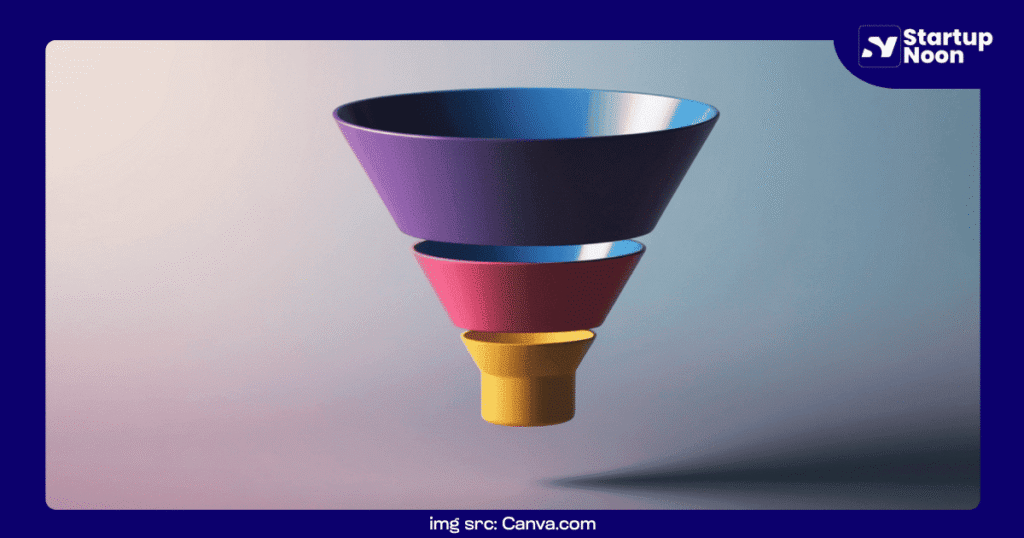
But, to turn this ship around, companies can focus on building a full-funnel marketing strategy that ensures they have everything covered and the brand is in the best position to succeed.
Why Full-Funnel Marketing Matters More Than Ever?
One of the biggest mistakes startups make is expecting marketing efforts to bear fruit immediately. A blog, an ad, or a social post may have performed well, but hasn’t led to expected revenue outcomes. In a scenario like this, most brands abandon the channels that have struggled instead of staying put.
But here’s what’s usually happening: they’re only building one part of the funnel.
A full-funnel approach treats marketing like a relationship, not a transaction. It fits naturally into a practical business marketing strategy because it accepts how real buyers behave, not how we wish they behaved.
Awareness: The Phase Where Trust Quietly Begins
It is very common that startups obsess over visibility while ignoring relevance. More traffic, more impressions, more reach, yet no meaningful growth.
A strong digital marketing strategy at the awareness stage is less about being loud and more about being useful. The most effective content I’ve seen wasn’t clever or viral, it was specific.
Blogs that answered uncomfortable questions. LinkedIn posts that shared lessons learned the hard way. Content that made someone think, “This person understands my problem.”
This stage is also where you lay the groundwork for future Marketing Campaign ROI. When awareness is built on relevance, later conversions become significantly easier and cheaper.
My Take on Go-To-Market Strategy for Startups
Here’s my honest opinion: most startups overcomplicate their go to market strategy.
You don’t need a 30-page plan. You need clarity.
In almost every successful case I’ve seen, the turning point came when founders could clearly answer three questions:
Who is this for? What pain does it remove? Why does it matter now?
Once those answers were clear, content ideas flowed naturally. Ads became sharper. The entire marketing planning strategy felt intentional instead of experimental.
Consideration: Where Startups Either Build Momentum or Lose It
This is the most neglected part of the funnel and the most expensive to ignore.
I’ve seen startups generate thousands of visits and hundreds of leads, only to lose them because there was no follow-up story. No nurturing. No reason to come back.
At this stage, your Marketing Strategy should feel human. Not automated-for-the-sake-of-it, but genuinely helpful.
Email sequences that explain, not sell. Resources that reduce confusion. Content that respects attention instead of exploiting it.
A data driven marketing strategy helps here, but only if you treat data as insight, not ego. Open rates, clicks, and drop-offs tell you where interest fades and where trust is still alive.
Content That Reflects Real Decisions, Not Ideal Ones
One thing I’ve learned: people don’t need more information. They need reassurance.
Middle-funnel content works best when it mirrors real decision-making. Comparison posts that admit trade-offs. Case studies that include mistakes. Stories that show progress, not perfection.
This approach strengthens your brand growth strategy without trying too hard. When content feels honest, people stay longer—and come back.
Conversion: My Perspective on Performance Marketing
Performance marketing is where many startups either scale—or burn out.
A focused performance marketing strategy works best when it’s disciplined. Fewer campaigns. Clear intent. One goal at a time.
I’ve seen startups improve results overnight simply by narrowing their focus: one landing page, one message, one audience segment.
This is also why some teams bring in a Performance Marketing Agency at this stage, not to outsource thinking, but to avoid costly mistakes when the stakes are higher.
Customer Acquisition That Doesn’t Feel Like a Treadmill
Here’s something founders don’t hear often enough: not all customers are worth acquiring.
A healthy customer acquisition strategy prioritizes alignment over volume. The best-performing funnels I’ve worked on didn’t chase everyone; they attracted the right people.
Small details make a huge difference here. Clear CTAs. Simple onboarding. Social proof that feels real, not manufactured.
Retention, in my experience, is where growth quietly compounds. When customers feel supported, they don’t just stay, they refer.
Measurement: What I Actually Pay Attention To
Forget vanity dashboards.
The metrics that matter are simple:
- Where do people drop off?
- Where do they engage?
- Where do they hesitate?
A strong Marketing Strategy evolves by answering those questions honestly. One small improvement at each stage of the funnel often outperforms one big campaign.
Mistakes I’ve Seen Too Many Times
Trying to do everything at once. Copying competitors without context. Measuring success only by traffic.
These mistakes don’t cause instant failure, but they slowly drain focus, budget, and morale.
The startups that survive are the ones that simplify, not the ones that add more.
Why Full-Funnel Thinking Wins Long-Term
If there’s one thing experience has taught me, it’s this: growth isn’t about hacks, it’s about alignment.
A full-funnel Marketing Strategy respects how people discover, evaluate, and trust brands. It turns limited budgets into sustainable momentum by focusing on clarity, consistency, and patience.
Startups don’t lose because they lack ideas. They lose because they spread those ideas too thin. When you build for the full journey, growth stops feeling random and starts feeling repeatable.