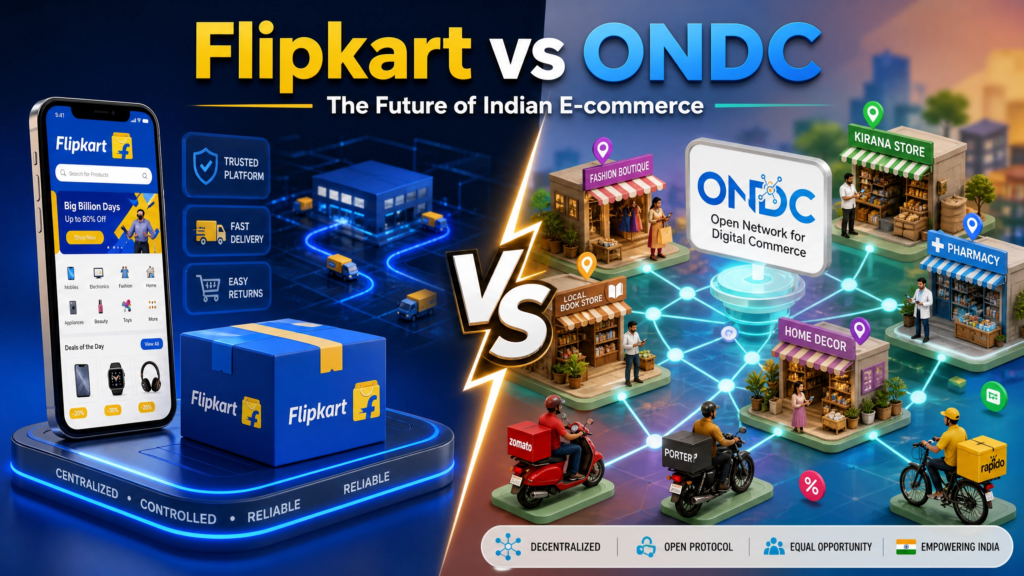

You browse Flipkart for the latest smartphone, enjoy fast delivery, easy returns, and trusted reviews. Then you hear about ONDC — where the same phone might come from a local seller at a lower price, without heavy platform fees.
In 2026, this is the reality for millions of Indian shoppers and small businesses. Flipkart represents the polished, centralized power of modern e-commerce. ONDC offers a decentralized, government-backed alternative meant to level the playing field. For the average Indian, this battle could mean lower prices, more choices, or better support for local sellers.
What is Flipkart?
Flipkart, owned by Walmart, is one of India’s biggest e-commerce platforms. Launched in 2007, it revolutionized online shopping with its Big Billion Days sales and strong focus on Tier 2 and Tier 3 cities. It excels in fashion (via Myntra), mobiles, electronics, and everyday essentials.
In 2026, Flipkart leads the market with a strong GMV share, a massive user base, and advanced logistics. It remains a go-to app for millions seeking convenience and variety.
What is ONDC?
The Open Network for Digital Commerce (ONDC) is not a single app or website. It is an open protocol, similar to UPI for payments. It lets different buyer apps and seller apps connect freely. A seller registers once and becomes visible across many platforms. Buyers discover products from small shops and local businesses without depending on one big company.
As of mid-2026, ONDC has onboarded over 7.6 lakh sellers, operates in 1,200+ cities, and processes millions of transactions monthly, especially in groceries, food, and local services.
Head-to-Head Comparison
For Buyers
- Convenience & Trust: Flipkart wins easily with one seamless app, fast delivery, reliable returns, and strong customer service.
- Price & Choice: ONDC often offers lower prices because of reduced commissions. You can compare the same product across different small sellers.
- Discovery: Flipkart uses powerful algorithms and personalized recommendations. ONDC promotes local and regional products more effectively.
For Sellers
- Commissions: Flipkart charges 10-25% (plus advertising and other fees). ONDC protocol fees are much lower — typically 1-5%, sometimes as low as 1-3%.
- Control: On Flipkart, the platform controls search rankings and promotions. On ONDC, sellers have more freedom over pricing, branding, and customer data.
- Reach: Flipkart provides instant access to millions of buyers. ONDC’s reach is growing fast in smaller towns, but still depends on the strength of connected buyer apps.
Logistics & Scale Flipkart has a mature, widespread delivery network. ONDC relies on a network of partners, which offers flexibility but can sometimes be less consistent. Flipkart is even exploring integration with ONDC for food delivery pilots in 2026.
Market Position in 2026: Flipkart (along with Amazon) still dominates organized e-commerce with over 60% combined market share in many categories. ONDC is smaller in daily order volume but growing rapidly in hyperlocal and B2B segments.
Strengths and Weaknesses
Flipkart’s Advantages:
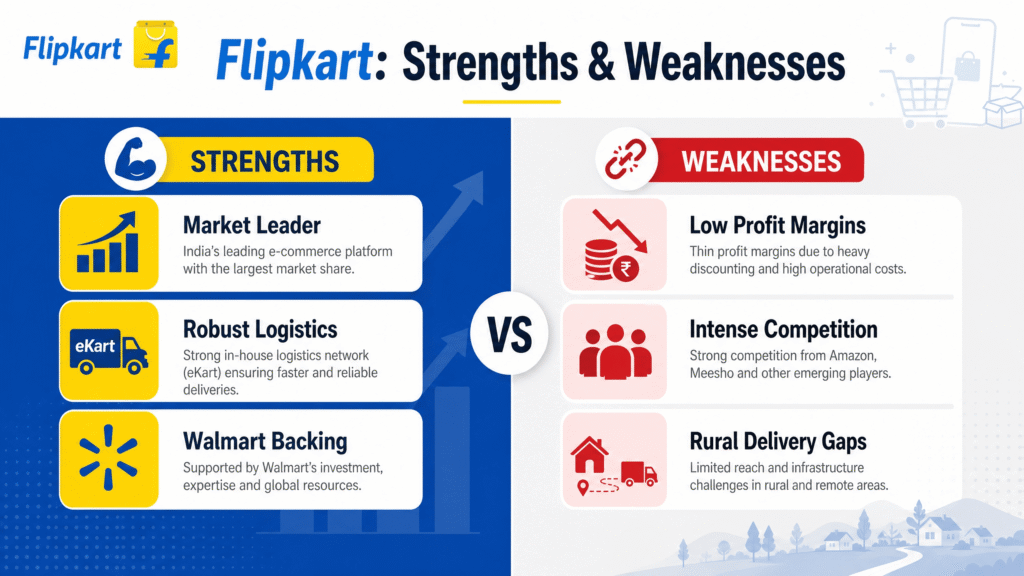
- Massive built-in traffic and brand trust
- Excellent customer experience and loyalty programs (Flipkart Plus)
- Strong performance in fashion, electronics, and festive sales
Flipkart’s Challenges:
- High fees reduce seller margins
- Intense competition for visibility
- Criticism over favoring certain large sellers
ONDC’s Advantages:
- Democratizes commerce for small businesses and kirana stores
- Lower costs are passed on as better prices
- Promotes inclusivity and reduces platform monopoly
ONDC’s Challenges:
- Inconsistent user experience across different apps
- Lower brand awareness for average shoppers
- Still building reliable logistics and delivery standards
The Bigger Picture
Flipkart represents the “walled garden” model that built India’s e-commerce boom. ONDC is the government’s attempt to create a more open ecosystem, empowering millions of small sellers and preventing dominance by a few players. Many experts see them as complementary rather than direct replacements.
Flipkart is even testing ONDC integration for certain services, showing the lines are blurring.
Actionable Takeaway
As a buyer: Use Flipkart for big-ticket items and urgent needs where convenience matters most. Try ONDC-enabled apps for groceries, local products, or daily essentials — you may find better deals. Compare prices on both.
As a seller: List on Flipkart for quick scale and visibility. Simultaneously, onboard with ONDC to reduce costs and reach new customers directly. Start small and track which channel gives better margins.
Thought-provoking question: Can ONDC’s open, low-cost model truly challenge Flipkart’s convenience and trust among India’s growing middle class, or will most shoppers stick with the familiar giant even if it means paying higher prices? The next 2-3 years will decide whether India’s digital commerce becomes more open and inclusive — or remains controlled by powerful platforms.