
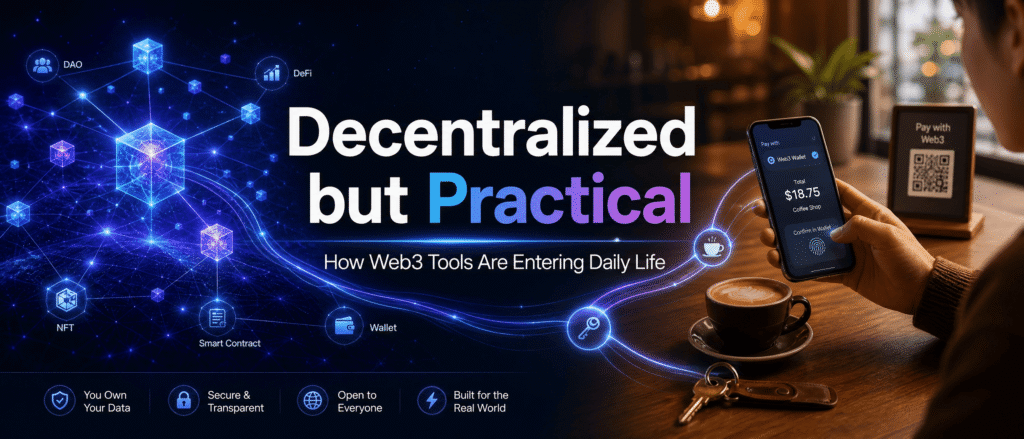

Web3 has long been associated with complex platforms, technical language, and future-facing ideas. But that image is starting to change. What once seemed distant is becoming more practical, more mobile, and far more relevant to ordinary users. The biggest shift in the market is not just decentralization itself, but the fact that digital tools are now being designed for everyday convenience.
That matters because people rarely adopt technology simply because it is new. They adopt it when it fits naturally into daily routines. The same principle now applies to Web3. Whether someone is managing subscriptions, sending value across borders, or making fast purchases online, the expectation is simple: digital tools should be useful without creating extra friction.
And that is where the story becomes interesting.
Why Utility Is Becoming the Real Selling Point
The current wave of innovation is less about speculation and more about function. Users increasingly want technology that works quietly in the background while improving speed, flexibility, and control. In personal finance, this trend is visible in mobile-first services, instant access models, and tools that make digital assets easier to use in real-world settings.
Importantly, this development is not limited to crypto. Consumers now expect smoother digital experiences in general, whether they are booking travel, paying for subscriptions, or trying to shop celebrity sunglasses online without unnecessary payment delays. The broader market trend is clear: people value systems that reduce waiting time and simplify action.
This is why Web3 is becoming more practical. Its appeal grows when it is no longer presented as something separate from everyday life, but as part of a wider movement toward more user-controlled and flexible finance.
When Digital Assets Become Spendable
One of the clearest examples is the Crypto Card. A Crypto Card gives users a way to spend cryptocurrencies in real life, which makes digital assets more functional and accessible. Instead of remaining in a wallet as something only held or traded, crypto can be used for internet shopping, at the point of sale, and even for cash withdrawals at ATMs.
That kind of usability is important because it connects Web3 with familiar consumer behavior. People do not want to relearn everything from the ground up. They want innovation that fits into habits they already have. A Crypto Card helps make that possible by turning decentralized value into something immediately usable.
Mountain Wolf is part of this practical shift. Its Crypto Card is instantly ready after verification, which reflects the growing expectation for immediate access in digital finance. It is also compatible with Apple and Google Pay, allowing users to integrate it easily into everyday payment routines. Another helpful feature is the ability to top up in real time from any crypto wallets, making the experience more responsive and flexible.
The real takeaway is larger than one product. Web3 is entering daily life because it is becoming easier to use, easier to understand, and more connected to real needs. That is what practical innovation looks like. As adoption grows, the most successful tools will likely be the ones that make decentralization feel less abstract and far more useful in everyday finance.